The verified connection
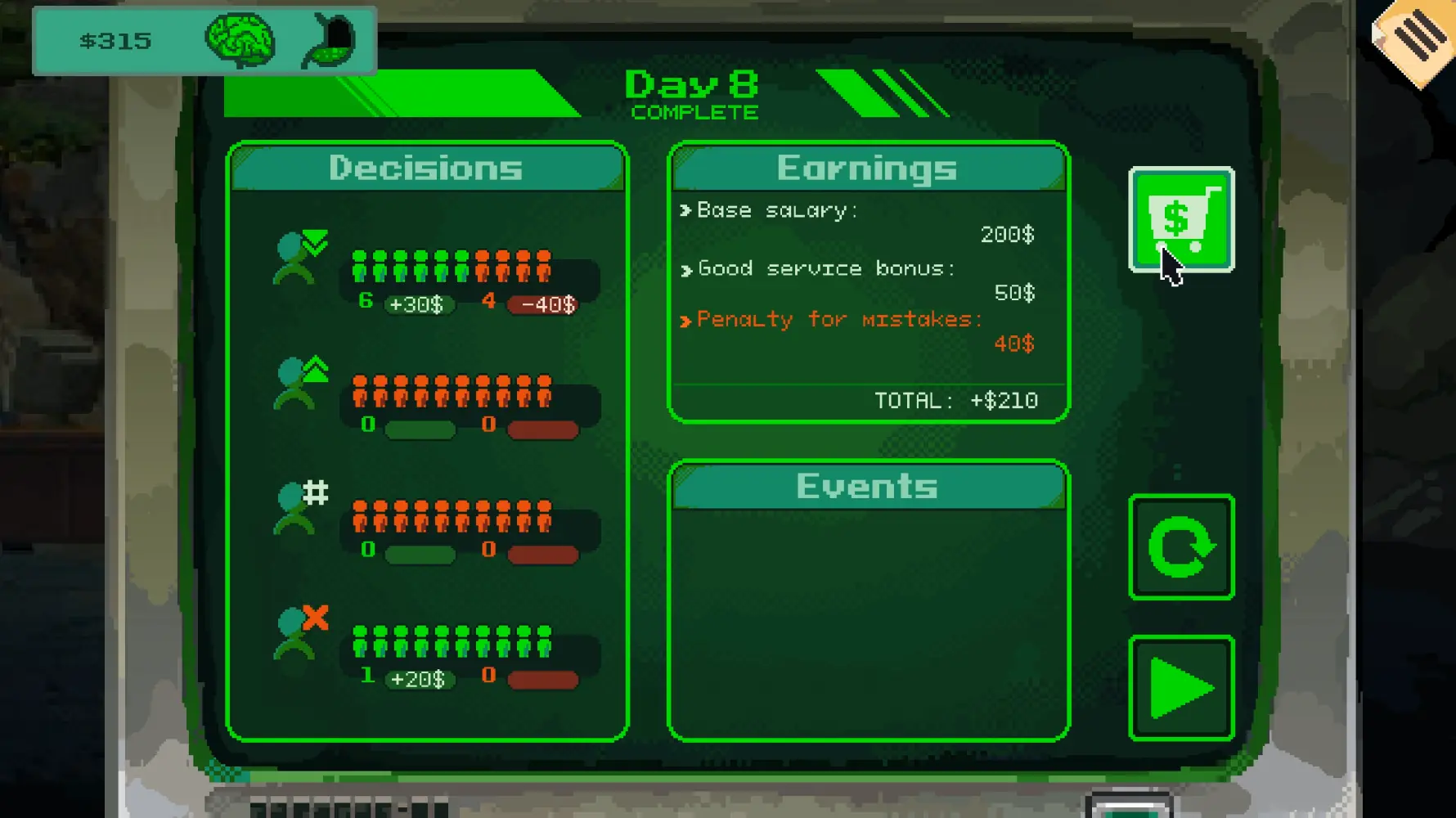
The current official description says that allowing the wrong person or entity to leave can help infection spread through the city. The demo launch announcement describes a visible infection system that could be reviewed at the start of each day or through the bunker periscope. Another official update refers to infection tracking and city operations.
Together, these sources establish the strategic relationship: the elevator is a containment boundary, and decisions at the desk can affect conditions outside. They do not establish an exact conversion between one mistake and a specific meter change.
How to think about operations
This evidence-first approach is slower than claiming a universal optimum, but it protects the guide from presenting a demo-era balance assumption as a full-release rule. It also makes future updates easier: verified operation choices can be added without replacing the page's core explanation.
- Treat outbound inspection as seriously as entry into the laboratories.
- Record uncertain releases and quarantines so later city changes can be interpreted carefully.
- Separate visible correlation from a proven numeric rule.
- Use operations according to names and descriptions actually shown in the active build.
- Re-check the current manual because balance and progression changed during demo development.
What remains unverified
No current official source publishes complete operation names, prices, formulas, infection thresholds, city-saving routes, or the precise timing of delayed effects. Player questions about saving the city are valuable evidence of search demand, not evidence of the answer.
After launch, this guide will distinguish observed operation effects from broader outcome claims. Until then, it documents the confirmed system boundary: protect the elevator, contain credible threats, and expect consequences outside the facility without pretending to know the hidden arithmetic.