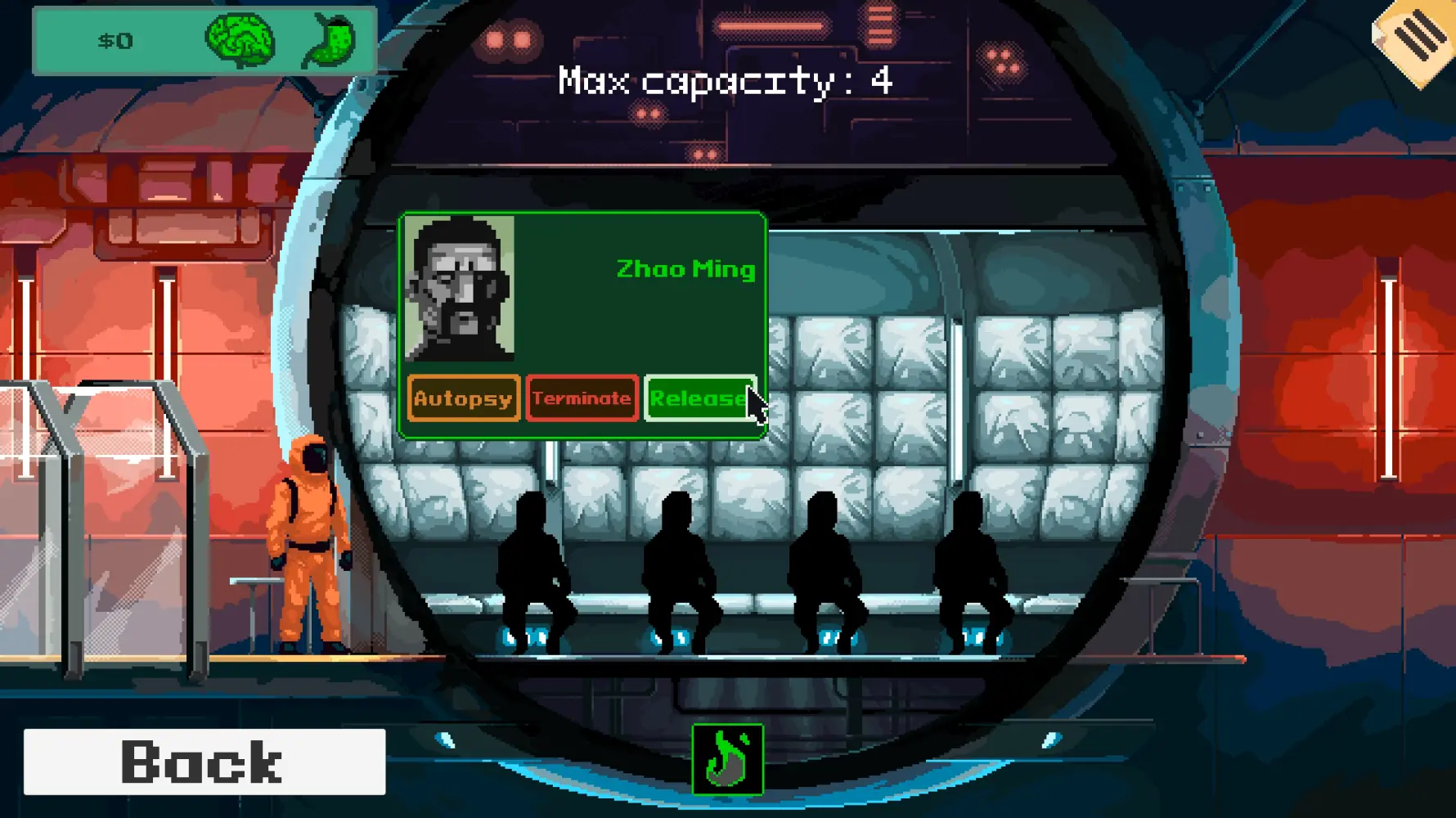
Quarantine is not proof of guilt
Alawar presents quarantine as one response to suspicious personnel and explicitly notes that the player may quarantine an innocent employee. That distinction matters: isolation protects the facility while uncertainty remains, but it does not retroactively prove that every suspicion was correct.
Some consequences may appear immediately, while others emerge after later shifts. Judge the quality of the original decision by the evidence available at the checkpoint, not only by information revealed afterward.
Build a defensible evidence chain
This sequence reduces both careless release and reflexive isolation. It also gives you a repeatable way to improve: if a later consequence reveals a mistake, you can see which check failed or which assumption lacked support.
- 01
Identify the first contradiction in identity, role, access, timing, documents, or behavior.
- 02
Re-check the manual and eliminate a simple reading or number error.
- 03
Use the physical or identity method best suited to the remaining question.
- 04
Look for corroboration across independent signals instead of stacking repeated impressions.
- 05
Quarantine when the unresolved risk warrants containment under the current rules.
- 06
Keep later outcomes separate from facts known at the moment of decision.
Containment and the outside world
The elevator connects the underground facility with the city, and official material states that allowing the wrong person or entity out can contribute to infection outside. Quarantine therefore has a strategic role, not just a desk-level scoring function.
Public sources still do not provide a complete formula for isolation outcomes, infection changes, capacity optimization, or a guaranteed best route. This guide will not invent those values. Use the infection guide for the verified relationship between checkpoint failures and city pressure.