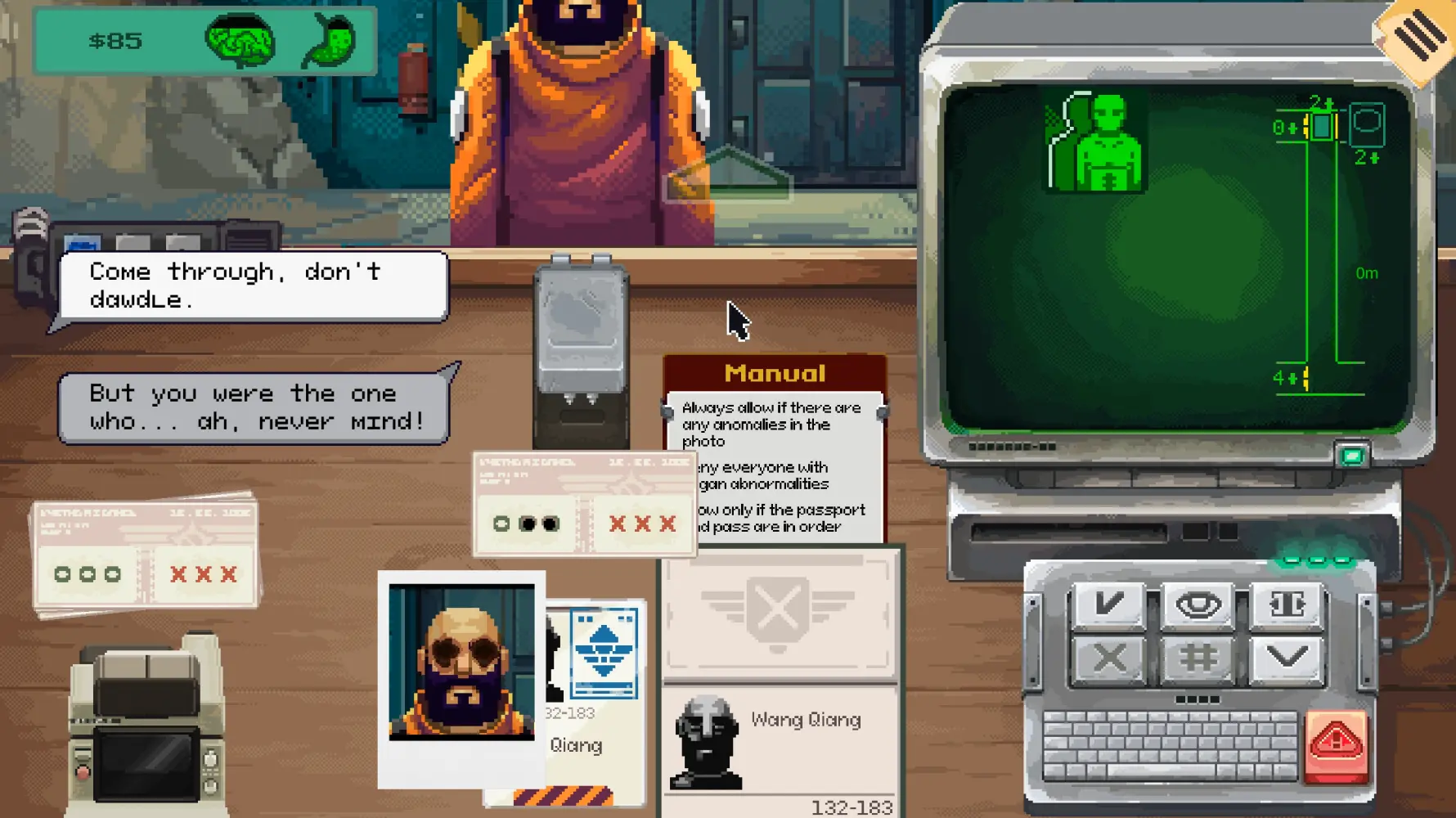
Run the same inspection chain every time
Inbound and outbound movement both matter. The official premise gives you responsibility for who enters the underground laboratories and who returns toward the city. A familiar face or plausible story should never bypass the written checks.
- 01
Identity — compare the name, photograph, and person at the window.
- 02
Role — confirm the stated job or position matches the record.
- 03
Clearance — verify that access fits the stated destination or duty.
- 04
Time — check whether the visit occurs inside the permitted window.
- 05
Documents — compare passes, passport numbers, and certificates.
- 06
Behavior — note inconsistent answers, slurred speech, or protocol deviation.
- 07
Physical check — use the available camera, scan, temperature, fingerprint, or sample method for unresolved risk.
- 08
Decision — admit, deny, or quarantine from the combined record.
Read contradictions, not vibes
The strongest inspection reason is usually a mismatch between two pieces of evidence: a name that differs from the pass, a role that does not fit access, a time outside the current rule, or a number that fails to match. The June demo update specifically added incorrect passport or pass numbers and improved the readability of fake medical certificates.
Behavior can justify more scrutiny, but it should remain part of the evidence chain. Official descriptions mention incorrect answers, deviations from protocol, slurred speech, and documents that look suspiciously perfect. None of those phrases creates a guaranteed one-signal verdict for every build.
Escalate, then contain when warranted
Physical and identity tools exist to investigate uncertainty. X-ray and internal inspection may expose inconsistencies that papers cannot; temperature and visible skin signs add another layer; fingerprints and blood analysis provide stronger identity or anomaly checks. Use the specific tools the current shift permits and avoid assuming exact thresholds that the official material does not publish.
Quarantine can protect the facility and city, but Alawar also confirms that an innocent employee may be isolated by mistake and that consequences may appear later. A defensible decision follows a documented chain rather than one dramatic clue.